
Durnstein: lanes, river views and an uphill choice
The short answer
Visit the village first, then choose whether the climb suits your footwear and time, plus weather. Combine Durnstein with one nearby stop rather than treating it as a quick photo break between several towns. Check the bus or boat return before heading uphill, especially when travelling from Vienna without a car.
In this guide6
By Melk Abbey Last updated
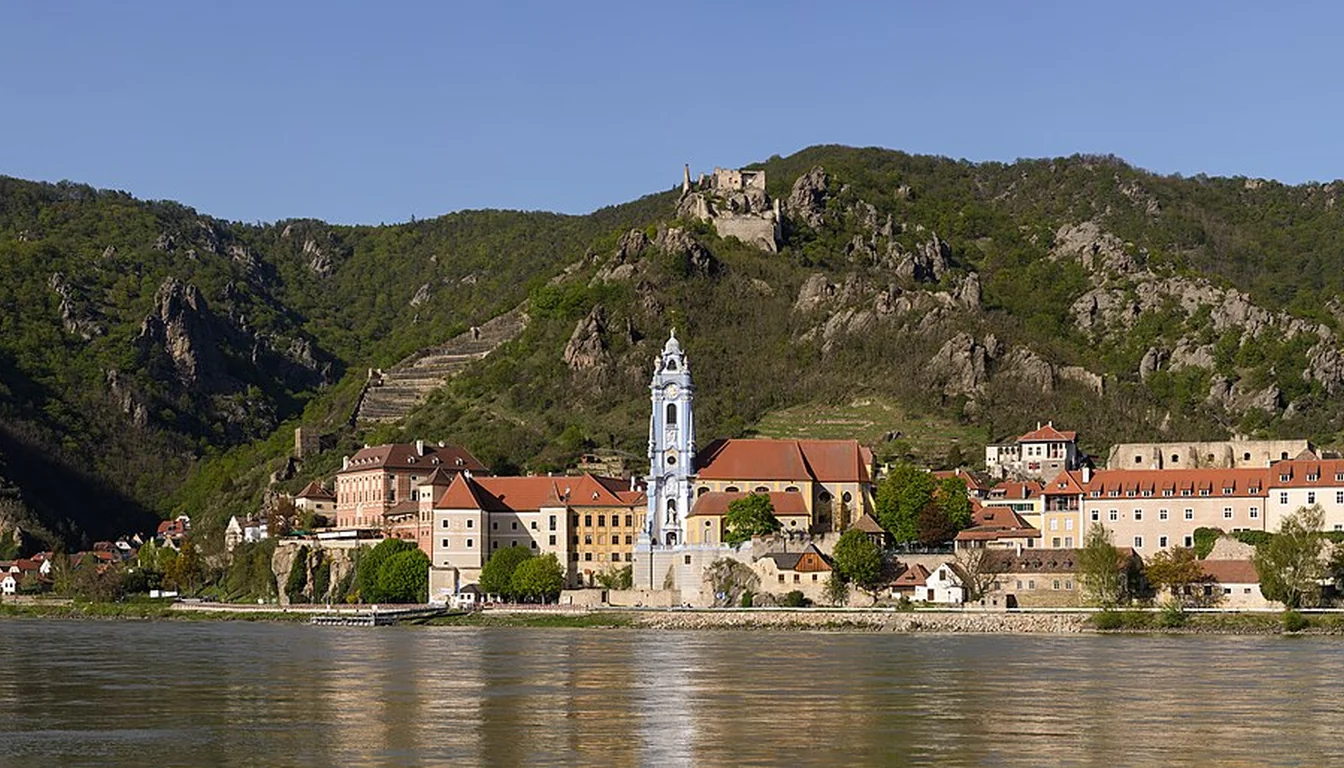
Durnstein is a small Wachau town beside the Danube, known for its blue-and-white Abbey tower and the castle ruins above it. The village streets and riverside suit a gentle stop. The castle walk is a separate uphill decision, and it does not fit every visitor or every weather window.
Durnstein: village first, hill second
The town sits on the north bank of the Danube between Krems and the central Wachau wine villages. Its compact streets make it a useful stop when you want a historic setting without committing to a long hike. The blue tower is a landmark beside the river; the ruin is on the hill above.
These are different experiences. A village visit gives you lanes and buildings, plus the riverside at a slower pace. The ruin adds height and a more demanding walk. You can enjoy the town without going up to the castle, and you should not let a crowded day push you into the climb.
Start with the lower streets and get your bearings. Decide where your return transport leaves before setting out. If you came by boat, the landing is not a promise that another sailing will fit your finish time. If you came by bus, check the correct stop and direction for the next leg.
Source: regional Durnstein and river-landing guide, checked 14 October 2026.
The castle ruins: decide before you climb
The ruins above Durnstein are an outdoor historic site reached on foot. The regional visitor page describes the uphill approach, with the ruin offering views across the valley. This is not a staffed indoor castle tour or an accessible lift ride.
Wear shoes with grip, carry water and leave enough daylight for the descent. Wet rock and heat, plus poor visibility can turn a short outing into the wrong choice. Do not count only the uphill portion when deciding whether you can catch a later connection.
The ruins are associated with the medieval imprisonment of an English king. The castle walking guide separates that historical context from the practical route choice. It also explains why the lower town is the useful alternative when the hill does not suit your day.
Source: Lower Austria's castle ruins information, checked 14 October 2026.
Arriving from Krems or Melk
Krems and Melk are the main rail gateways for this part of the valley. Durnstein lies between them on the north-bank corridor. For public transport, look up the complete trip in the regional journey planner rather than assuming a Vienna train ends at the village.
VOR identifies bus 715 as the north-bank connection between Krems and Melk. Use the current planner for the exact stops and times. Its existence does not prove an exact departure on the day you travel, or that every stop is served at every hour.
The seasonal tourist railway is a different option from the main-line train to Krems. Check its dates and station plans separately. A boat is also seasonal and timetable-led. Match the departure time to the part of the town you will finish in, leaving time to reach the landing or stop.
Sources: regional journey planning and VOR Wachau transport overview, checked 14 October 2026. Check departure times for your travel date in the planner.
A manageable Durnstein visit
For a gentle outing, keep to the town and river. Add a quiet meal or a pre-arranged tasting if that is the point of your visit. Avoid promising yourself the hill as well until you know how much time the lower town has taken.
For a walking day, make the castle the main extra activity. Start before the light or weather deteriorates, and keep the rest of the itinerary light. A winery visit, village walk and castle climb can each expand; combining all three with a tight boat departure leaves little room for delay.
For a first Wachau day from Vienna, compare a Durnstein-led outing with an Abbey-led one. Melk Abbey has timed interior access, while the lower village allows more flexibility. Our valley guide helps you choose the emphasis before booking.
Wine visits and overnight stays
Wine is a good reason to slow down in this part of the valley, but a tasting and a cellar tour are different purchases. Check the language, number of pours and duration, plus transport before booking. The wine tour guide compares the formats without claiming we have taken each tour.
If you want to stay near Durnstein, decide how you will arrive and leave after dinner. A picturesque location can still involve luggage on uneven ground or a longer walk from transport. Read the Wachau base comparison before choosing a room. We compare locations and transport needs, rather than giving fictional property reviews.
Durnstein visit verdict
Choose Durnstein for a village and river stop, then add the hill only when time and conditions support it. A slow village visit is a complete outing. For the castle, read the route advice first and plan the descent as carefully as the climb.